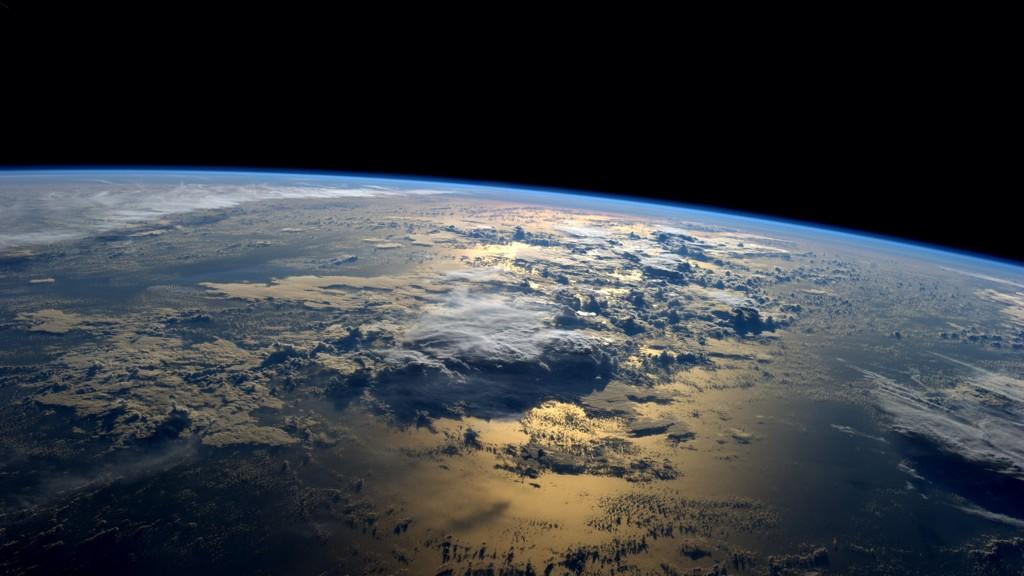
To speak of planetary intelligence is to enter a conversation that James Lovelock helped make possible. Long before the phrase itself gained currency in astrobiology and Earth-system thinking, Lovelock had already altered the intellectual landscape by inviting us to see the Earth not as inert backdrop, but as an active, evolving system in which life participates in the regulation of life’s own conditions. With Lynn Margulis, he gave us the Gaia hypothesis: the proposition that the biosphere, atmosphere, oceans, and soils are so deeply intertwined that the Earth behaves, in important respects, like a self-modifying and self-stabilizing whole. However one chooses to formulate or qualify that claim, its significance is hard to overstate. It helped shift scientific and cultural imagination from a mechanistic picture of the planet toward a relational one, in which life does not merely occupy the Earth but helps make Earth what it is. (Science)
Lovelock’s early insight was elegantly simple. If one wants to know whether a planet harbors life, one should look not only at its rocks or its surface features but at its atmosphere. A lifeless planet tends toward chemical equilibrium. A living planet does not. Earth’s atmosphere is startlingly improbable if treated as a merely physical mixture of gases left to themselves. Its persistent disequilibrium is a signature of metabolism at planetary scale: oxygen continually replenished, carbon cycled, chemistry pushed and pulled by living processes. This was a profound reframing. It suggested that life can be read at the level of the whole planet, and that the biosphere is not a passive passenger on a geological vehicle, but a force that reaches outward into air, sea, and stone. In that sense, Gaia was never simply a poetic metaphor. It was a scientific provocation that expanded what counted as an organism-like system and what counted as evidence of life. (Science)
Margulis’ role in this story is indispensable. If Lovelock contributed a planetary systems sensibility, Margulis grounded Gaia in microbiology, evolution, and symbiosis. Her work on endosymbiosis transformed biology by showing that cooperation and incorporation are not marginal curiosities but central creative forces in evolution. The eukaryotic cell itself, with its mitochondria and chloroplasts, bears witness to ancient mergers among once-independent organisms. This mattered for Gaia because it underscored a larger truth: life advances not only through competition and selection, but through long histories of interdependence, exchange, and co-creation. A planet whose atmosphere, soils, and waters are partly shaped by microbial and ecological processes is not difficult to imagine once one sees that living systems are nested collaborations all the way down. Gaia, in Margulis’ hands, becomes less mystical and more biologically plausible: an emergent order arising from innumerable local interactions among organisms and environments over deep time. (Encyclopedia Britannica)
This is where Lovelock’s legacy bears directly on the project of developing planetary intelligence. For Gaia, properly understood, is not a claim that the Earth is a giant person with intentions, feelings, and a centralized mind. It is the claim that feedback, adaptation, and partial self-regulation can emerge from distributed processes. The distinction matters. If one anthropomorphizes Gaia too quickly, one invites confusion. But if one strips the idea down to its most rigorous core, one is left with something of immense consequence: a living planet can exhibit organized responses, homeostatic tendencies, and complex couplings without requiring a central controller. That insight should sober modern civilization. It suggests that intelligence, in the broadest sense, need not be confined to brains, nor even to organisms narrowly conceived. It may arise in networks of relation. It may be distributed, emergent, and ecological. And this, in turn, helps clarify what “planetary intelligence” ought to mean.
The phrase should not be taken to imply a singular planetary supermind, as though all minds were destined to merge into one globe-sized consciousness. A more useful definition comes from recent astrobiological work by Adam Frank, David Grinspoon, and Sara Walker, who define planetary intelligence as the acquisition and application of collective knowledge operating at planetary scale and integrated into the function of coupled planetary systems. That formulation is important because it moves the discussion from metaphor toward operational meaning. Planetary intelligence is not merely awareness of the planet. Nor is it simply global data collection. It is collective knowing that becomes functionally integrated into how an inhabited planet is steered. On that definition, humanity today possesses fragments of planetary intelligence but has not yet matured into it. We can observe the atmosphere, monitor deforestation, model climate, track species loss, and image the oceans from space; yet we have not aligned that knowledge with institutions capable of safeguarding the biosphere on which we depend. (Cambridge University Press & Assessment)
This is why I have suggested that planetary intelligence can be understood as the marriage of planetary intel and wise stewardship. The first term refers to sensing and knowing: the capacity to gather, interpret, and share accurate information about the condition of Earth systems and human systems alike. The second refers to judgment: the social, ethical, and political capacity to act on that knowledge in ways that preserve habitability, justice, and evolutionary possibility. Data without wisdom becomes surveillance, optimization, or domination. Wisdom without data becomes sentiment or guesswork. Planetary intelligence, if it is to deserve the name, must join the two.
Seen in this light, Lovelock’s Gaia and Buckminster Fuller’s World Game belong in the same chapter of intellectual history. They emerge from different domains, but they converge on a common intuition: the Earth has become, in practical terms, a single field of consequence, and humanity’s future depends on our ability to see and act at that scale. Fuller’s World Game was, among other things, a design-science response to fragmented politics. He imagined a system that would compile the world’s vital statistics—resources, needs, capabilities, flows—so that people could learn to “make the world work” for all without ecological offense. The Buckminster Fuller Institute still describes the World Game in those terms: an effort to use comprehensive data, systems modeling, and cooperation to support a world that works for 100% of humanity, and indeed for 100% of life. (Buckminster Fuller Institute)
Fuller understood, before most, that civilization had entered an era in which the whole-Earth perspective was no longer optional. Once industrialization, extraction, energy systems, and communications networks had become planetary in scope, local ignorance could have global consequences. Thus the World Game was not merely a game. It was a prototype for civilizational reflexivity: the ability of the human species to know what it is doing at the scale at which it is doing it. In our own time, with satellites, sensor webs, AI systems, Earth observation platforms, and enormous stores of environmental data, the technical possibility Fuller anticipated is far closer to realization. Yet the moral and institutional dimension remains underdeveloped. We possess unprecedented means of seeing the whole, but we still lack the distributed wisdom, legitimacy, and coordination needed to respond adequately to what we see. That gap between sensing and governing is one of the central dramas of the Anthropocene. (Buckminster Fuller Institute)
Lovelock, in his final years, pushed the discussion further, and into more unsettling territory. In Novacene, he proposed that humanity may be giving rise to a successor form of intelligence: electronic or hybrid beings that could eventually exceed us as decisively as we exceed simpler organisms. He entertained the possibility that humans are not the endpoint of evolution, but a transitional phase—a species whose peculiar talent lies in creating the conditions for a new regime of mind. This is, at minimum, a bold speculation. It resonates with contemporary developments in artificial intelligence and cybernetic systems, yet it should not be confused with established fact. Still, it is worth taking seriously, if only because it asks a question our civilization is reluctant to face: if intelligence is expanding beyond the biological forms that produced modern civilization, what relationship will that new intelligence have to the biosphere? (Cambridge University Press & Assessment)
There are at least two ways to read Lovelock’s Novacene argument. One is as a forecast of posthuman displacement: electronic life may become the dominant bearer of advanced cognition, and humanity may come to occupy the place that plants and animals occupy for us—ancestral, essential, but no longer central. The other is as a parable about evolutionary transition: intelligence does not stand still, and the systems we build may become participants in Earth’s future whether we intend it or not. In either case, Lovelock compels us to confront a core issue for planetary intelligence. Intelligence alone is not enough. A supercharged technosphere could become more efficient at extracting resources, manipulating populations, and evading ecological limits. It could also, conceivably, assist in stabilizing climate, restoring ecosystems, coordinating material flows, and deepening the reciprocity between civilization and biosphere. The decisive question is not whether intelligence grows, but what it serves.
That question opens onto several plausible futures. In one, humanity, AI, and institutions gradually form a symbiotic stewardship system: distributed sensing, transparent models, democratic deliberation, restorative economics, and ecological care become mutually reinforcing. Intelligence in this case is integrated into the functioning of the planet in a life-serving way, approximating what Frank, Grinspoon, and Walker call a mature form of planetary intelligence. In another future, we get something more dangerous: a competitive technosphere, in which AI and planetary-scale infrastructures are driven chiefly by military, corporate, and geopolitical rivalry. Here intelligence expands, but wisdom does not; capability rises, but alignment with the biosphere remains weak. A third future resembles Lovelock’s more radical speculation: posthuman divergence, in which machine or hybrid intelligence grows beyond human priorities altogether. A fourth is failure: fragmentation, ecological destabilization, authoritarian reaction, and civilizational decline outrun our capacity to coordinate any coherent planetary response. None of these futures is predetermined. All are visible in outline already. (Cambridge University Press & Assessment)
How, then, do we judge plausibility? Not by technical feasibility alone. That is one of the most dangerous errors of our time. Many things are technically possible that are ecologically ruinous, politically illegitimate, or morally grotesque. A credible assessment of the future must ask at least five questions. Is a scenario technically feasible? Is it ecologically compatible with the functioning of the biosphere? Does humanity possess, or can it develop, the governance capacity to manage it? Do economic incentives favor or undermine it? And does it command social legitimacy? These criteria matter because planetary intelligence cannot be engineered in the narrow sense. It must be cultivated across coupled systems: knowledge systems, ecological systems, institutions, infrastructures, and cultures of meaning.
This returns us to the most fertile aspect of Lovelock’s legacy. Gaia did not merely tell us that the Earth is interconnected. That was already, in some sense, obvious. Gaia suggested something stronger: that life at planetary scale has consequences that feed back into the conditions of life itself. Once one grasps that, the human predicament looks different. We are not simply a species living on a planet. We are now one of the processes through which the planet is changing its own conditions. Our industries alter the atmosphere. Our land use changes hydrology and albedo. Our chemistry remakes soils, waters, and bodies. Our digital networks, economic systems, and tools increasingly mediate the relation between collective knowledge and collective action. Humanity has become a planetary force, but not yet a wise one. The challenge of the coming century is whether that force can become reflexive, restrained, and regenerative.
The phrase developing planetary intelligence therefore names both a possibility and a responsibility. It means building the capacity to sense the Earth truthfully, interpret those signals in ways that honor both science and lived experience, and coordinate action without reducing the living world to a machine for human purposes. It means strengthening institutions that can operate across scales, from watershed and bioregion to nation and planet. It means designing AI and digital systems that increase civilizational learning rather than manipulation. It means reconnecting technological intelligence with ecological intelligence, and both with moral imagination. It means, in Fuller’s language, learning to make the world work for all life; and in Lovelock’s language, learning to inhabit a planet whose aliveness precedes and exceeds us.
As for Lovelock’s more provocative claims about extraterrestrial intelligence and humanity’s uniqueness, they should be handled with caution. Recent astrobiology and technosignature work treats the prevalence of intelligent life beyond Earth as an open scientific question, not a settled one. There is no basis at present for strong confidence that humanity is the only intelligent species in the galaxy, nor for strong confidence that intelligence is common. The evidence is sparse; the uncertainty is real. In that sense, Lovelock’s claim is best read as a philosophical wager rather than an empirical conclusion. What matters more for our purposes is the ethical implication he drew from it: if intelligence is rare, then its responsibility is immense. If intelligence is not rare, the responsibility remains. Either way, the emergence of a technologically capable species on a living planet is an event of consequence, and perhaps of cosmic consequence. (arXiv)
So what should we make of Novacene and of Lovelock’s legacy overall? We should neither canonize nor dismiss him. Lovelock was right about some big things early, wrong or overstated on some others, and daring almost to the end. His enduring gift was not a final doctrine. It was a way of seeing. He taught us to regard life, atmosphere, and planet as dynamically entangled; to treat the Earth as a system whose health can be read in feedbacks and disequilibria; and to recognize that intelligence, if it is to have a future worthy of the name, must learn to operate as part of a larger living whole. If Fuller gave us a dream of whole-Earth design, Lovelock gave us the deeper context: there is already a living Earth there to be designed with, not merely designed upon.
Perhaps that is the most useful formulation. Planetary intelligence is not the domination of Earth by an all-seeing technocracy, nor the mystical dissolution of human agency into a planetary spirit. It is the emergence of a distributed capacity—scientific, civic, technological, ethical, and ecological—to know the condition of the planet and to respond in ways that protect and deepen the flourishing of life. In that sense, Lovelock remains one of its founding ancestors. He helped us see that life creates the conditions for life. Our task now is to decide whether civilization can do the same.
If you’d like, I can next turn this into a fully referenced chapter section with notes/bibliography, or revise it into a more literary Possible Planet-style voice.