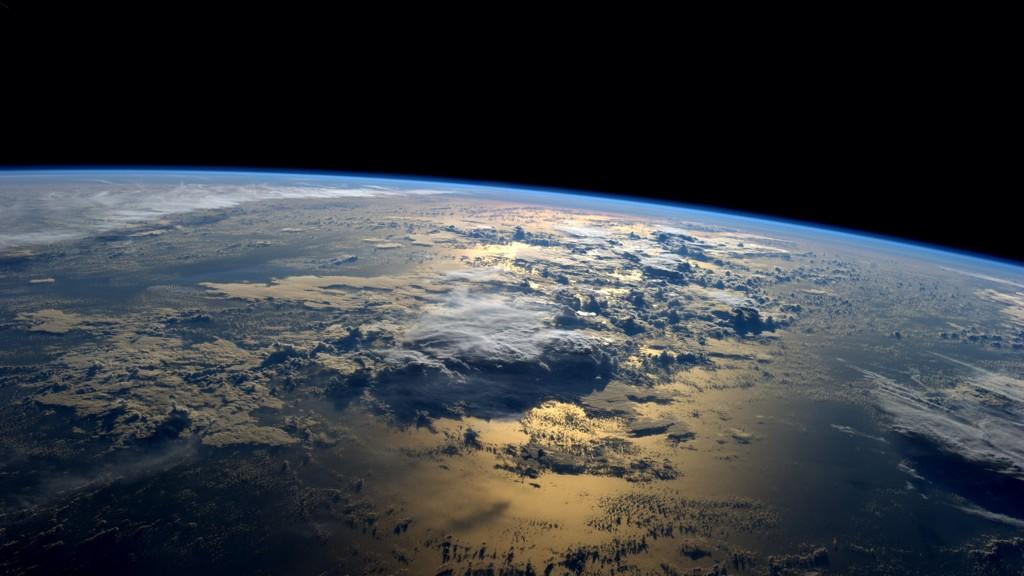
As a complementary inquiry to that on global threats and strengthening the planet’s immune system, I’d like to see a piece on “Healing Gaia,” starting from James Lovelock and Lynn Margulis’ Gaia theory, and bringing us up to date on what is known about the state of planetary health and possible avenues for the full restoration of function and strengthening the foundation for further evolution
Here is a draft piece on “Healing Gaia.”
From the beginning, the Gaia hypothesis was an attempt to describe Earth not as a pile of separate parts, but as a coupled, living system. James Lovelock proposed that life does not merely adapt to a passive planet; it actively helps regulate the conditions of habitability. Lynn Margulis deepened and grounded this intuition by showing how microbial life, symbiosis, and biogeochemical feedbacks have been central to the shaping of Earth’s atmosphere, soils, and seas. In its strongest early form, Gaia sounded to some like mysticism or teleology. But in a more disciplined form, much of contemporary Earth-system science has moved toward a related view: the atmosphere, oceans, ice, soils, microbes, forests, and human systems are tightly entangled, and their interactions can stabilize the planet for long periods—or destabilize it when key thresholds are crossed. (Encyclopedia Britannica)
So “Healing Gaia” should not mean romanticizing Earth as a benevolent mother who will automatically correct our excesses. Gaia is not guaranteed to save us from ourselves. The more sober lesson is that Earth has long possessed self-regulating capacities, but those capacities are finite, conditional, and now under severe strain. The question before us is whether humanity can shift from being a destabilizing force within Gaia to a conscious participant in restoring planetary function. (Stockholm Resilience Centre)
What, then, is the state of planetary health? The answer, at present, is alarming. The 2025 Planetary Health Check concluded that seven of the nine planetary boundaries have now been transgressed, with ocean acidification newly assessed as beyond its safe boundary. Those boundaries are meant to track the processes that maintain a stable and resilient Earth system. Crossing them does not mean immediate collapse, but it does mean rising risk of nonlinear change, feedback cascades, and loss of resilience. In parallel, WMO confirmed that 2024 was the warmest year on record at about 1.55°C above the pre-industrial baseline in annual terms, and WMO and Copernicus reported that 2025 remained among the hottest years ever measured, even if slightly below 2024. Meanwhile, model-based work published in Nature in 2025 found that under current trends and policies, most planetary-boundary indicators worsen toward mid-century rather than recover. (Stockholm Resilience Centre)
Biodiversity and ecosystem function tell the same story. The 2024 IPBES Nexus Assessment emphasizes that biodiversity decline is already undermining ecosystem functioning, water security, food security, nutrition, human health, and climate resilience. It also stresses that these crises are interdependent: climate change worsens biodiversity loss, biodiversity loss erodes water and food systems, and fragmented governance fails because it treats these as separate problems. That is a profoundly Gaian insight. The planet’s organs are connected. One cannot degrade the watershed, simplify the forest, poison the soil biome, acidify the ocean, and expect the larger body to remain healthy. (IPBES)
And yet the news is not only grim. A healing frame becomes plausible when we notice that Earth still retains significant regenerative capacity. Rockström and colleagues wrote in 2025 that the Earth system still exhibits self-dampening feedbacks, meaning stabilizing processes have not disappeared; the narrowing challenge is to act before destabilizing feedbacks dominate. The 2025 Global Tipping Points work similarly argues that while harmful tipping points are approaching, positive tipping points are also available: rapid shifts in energy, transport, food systems, restoration practice, and governance can become self-reinforcing once they cross certain thresholds. In that sense, healing Gaia is not fantasy. It is a race between destructive feedbacks and restorative ones. (Frontiers)
What would healing actually involve?
First, it means stopping the active injuries. A physician cannot heal a patient while the wounds are still being inflicted. The biosphere is being damaged by fossil-fuel combustion, deforestation, land conversion, nutrient overload, persistent chemical pollution, overexploitation, and institutional fragmentation. The first task is therefore not exotic: rapidly reduce greenhouse-gas emissions, phase down fossil infrastructure, halt ecosystem destruction, and constrain the flows of substances and practices that destabilize key Earth-system processes. That is less glamorous than futurist talk of planetary management, but no credible restoration is possible without it. (Stockholm Resilience Centre)
Second, healing Gaia means restoring damaged regulatory tissues. Forests, wetlands, peatlands, mangroves, seagrasses, kelp forests, shellfish reefs, grasslands, floodplains, and healthy soils are not merely beautiful landscapes. They are part of the planet’s metabolism. They store carbon, regulate water, buffer floods, moderate heat, build soil, host pollinators, support fisheries, and maintain biochemical cycling. The UN Decade on Ecosystem Restoration is built on the premise that restoring these systems is one of the fastest ways to recover ecological function while also supporting livelihoods and resilience. UNEP notes that countries have already pledged to restore 1 billion hectares, and its World Restoration Flagships are intended to demonstrate that large-scale recovery is possible when restoration is long-term, community-based, and monitored for quality rather than just area. (UN Decade on Restoration)
Third, healing Gaia requires working with interdependence rather than against it. The IPBES Nexus Assessment is explicit that biodiversity, water, food, health, and climate must be governed together. That means agriculture can no longer be judged by yield alone; it must be judged by its effects on soils, aquifers, pollinators, climate, and nutrition. Cities can no longer be judged by GDP or property values alone; they must be judged by their material throughput, ecological footprint, thermal resilience, and relationship to their bioregion. Public health can no longer be separated from heat, air quality, land use, and ecosystem integrity. In other words, healing Gaia is inseparable from healing the fractured categories of modern governance. (IPBES)
Fourth, it means restoring the ocean as a living regulator. Ocean acidification joining the list of transgressed planetary boundaries is symbolically and materially important. Lovelock’s Gaia always included the chemistry of sea and sky, not just terrestrial life. The ocean absorbs heat, cycles carbon, drives weather, and underwrites much of Earth’s habitability. Restoring ocean health means reducing emissions, curbing nutrient runoff and pollution, rebuilding fisheries, protecting marine ecosystems, and restoring coastal ecologies such as mangroves and shellfish reefs that stabilize both land and sea interfaces. The new ocean warning in the 2025 planetary-boundaries update suggests that “healing Gaia” cannot be land-centric. (Stockholm Resilience Centre)
Fifth, healing Gaia means re-legitimizing Indigenous and place-based knowledge. Margulis’s contribution to Gaia was to show that the smallest and oldest forms of life are foundational to the whole. There is a parallel cultural lesson here: those communities that have remained closest to living systems often retain practical knowledge about reciprocity, succession, fire, water, seasonal cycles, and limits. Recent restoration efforts recognized by UNEP and FAO emphasize the role of Indigenous and local stewardship in bringing ecosystems back to life. The point is not to idealize any group, but to recognize that a viable planetary civilization will need epistemic pluralism: Earth observation, systems modeling, ecological science, and grounded traditions of care. (FAOHome)
Sixth, healing Gaia requires positive tipping points in technology and infrastructure. Some of the most hopeful work now underway suggests that social-technical systems can flip rapidly once economics, policy, and norms align. The Global Tipping Points initiative points to self-reinforcing transitions in clean energy and transport as examples. This matters because the longer harmful systems remain locked in, the more stress is imposed on the biosphere. Rapid deployment of clean power, electrification, efficiency, grid modernization, and low-material circular design are not separate from ecological restoration; they reduce the pressure that prevents restoration from taking hold. (Global Tipping Points)
But to speak of “full restoration of function” we have to be careful. Some damage will not be undone on human timescales. Lost species cannot simply be summoned back. Melting ice sheets, acidifying oceans, and disrupted monsoons may take centuries to millennia to recover, if they recover at all. Coral reefs in many regions are already near or beyond critical stress thresholds. So healing Gaia cannot mean returning Earth to some frozen Holocene baseline. It must mean something more subtle and more demanding: restoring as much regulatory capacity, ecological complexity, resilience, and evolutionary possibility as we can, while preventing further irreversible loss. (ScienceDaily)
That last phrase—evolutionary possibility—is essential. Lovelock and Margulis helped us see Earth as a planet where life modifies the conditions for further life. A healed Gaia would not be a museum. It would be a living system capable of continued differentiation, adaptation, and creativity. The goal is not merely survival. It is to re-establish the conditions under which life can continue to evolve in richness and depth.
This has moral and civilizational implications. If humanity has become a planetary force, then our task is no longer simply to minimize our footprint while pretending we stand outside the system. We are inside it, with powers that are now geophysical in effect. The mature response is not domination, but stewardship informed by humility. We need forms of planetary intelligence capable of seeing whole systems, noticing feedbacks, distinguishing repair from further disruption, and coordinating action across scales—from watershed restoration to food-system redesign to climate policy to ocean governance. That is what “Healing Gaia” ultimately points toward: the transition from unconscious planetary disturbance to conscious planetary care. (IPBES)
So the piece ends where Gaia theory, planetary health, and your larger project converge. Earth is not dead matter awaiting management. Nor is it a magically self-correcting mother who will absorb infinite abuse. It is a living, dynamic, stressed, still partly self-healing world. We are one expression of its intelligence—but a dangerously immature one. Our opportunity now is to become a better organ within the larger body: to restore wetlands as kidneys, forests as lungs and rainmakers, soils as skin and gut, reefs and estuaries as nurseries, and cultures of reciprocity as something like a planetary nervous system. Healing Gaia, then, is not just an environmental program. It is a developmental task for civilization itself. (Encyclopedia Britannica)
I can also turn this into a more polished Possible Planet-style chapter section, with a stronger narrative opening and closer alignment to your planetary-intelligence framework.