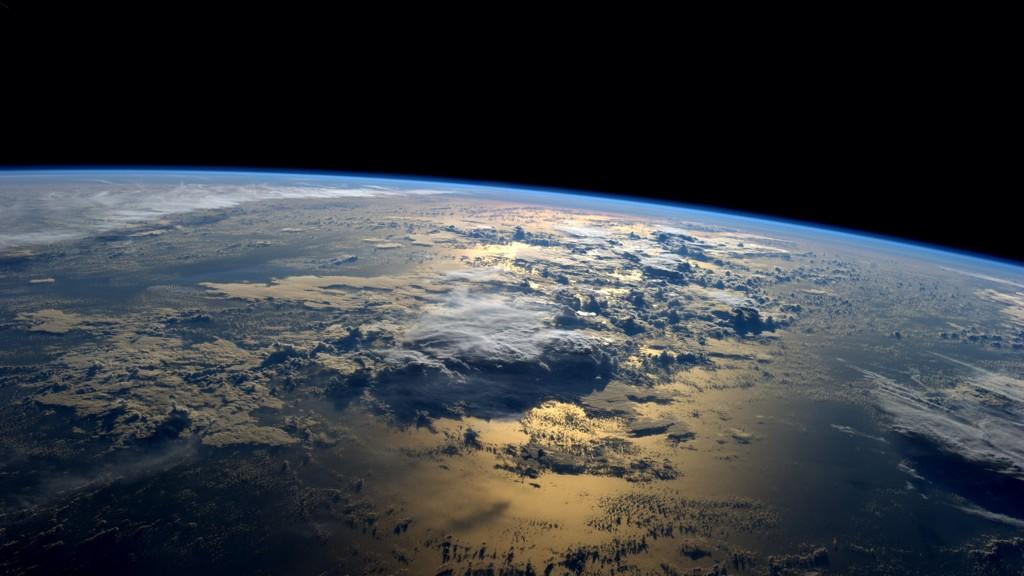
Developing Planetary Intelligence should be framed as the Institute’s founding book: part diagnosis, part conceptual framework, part design brief, and part call to action.
What follows is a proposed outline that aims to do four things at once:
- establish planetary intelligence as a serious field of inquiry and action,
- explain why it is urgently needed now,
- show that it has practical application at multiple scales, and
- position the Institute as a credible convening and research body rather than merely an advocacy platform.
Working title
Developing Planetary Intelligence
AI, Earth Systems, and the Future of Civilization
Possible subtitle alternatives:
- Toward a Life-Centered Intelligence for a Living Earth
- From Fragmentation to Stewardship at Planetary Scale
- How Humanity Can Learn to Sense, Decide, and Care as Part of a Living Planet
Core thesis
Humanity has entered a phase of history in which its collective power is planetary, but its intelligence remains fragmented, immature, and poorly aligned with the biosphere. We have developed extraordinary capacities to extract, compute, model, and manipulate dead matter, but not yet the civilizational capacity to perceive the Earth as a living whole and govern our behavior accordingly. “Planetary intelligence” names the distributed human-and-more-than-human capacity to sense, understand, remember, deliberate, and act at Earth scale in service to life.
The book argues that developing planetary intelligence is now one of the central tasks of civilization.
Purpose of the book
This first publication of the Institute should do more than introduce a phrase. It should:
- define the field,
- gather its intellectual ancestors,
- map the present predicament,
- propose a framework for action,
- identify practical domains of application,
- clarify the role of AI and digital systems,
- and invite participation in a long-term institution-building project.
Intended audience
This book is written for an educated general audience, but with enough depth to be taken seriously by scholars, systems thinkers, funders, technologists, ecological practitioners, and civic leaders.
It is intended to be accessible but not simplified. Serious, but not academic in tone. It is intended to provide a foundation for an emerging field.
Overall structure
I would suggest four parts, with an introduction and conclusion:
- Introduction: Why planetary intelligence, and why now?
- Part I: The planetary predicament
- Part II: What planetary intelligence is
- Part III: How it can be developed
- Part IV: Institutions, practices, and pathways
- Conclusion: A civilization worthy of a living planet
That gives the book a strong arc:
crisis -> concept -> design -> application
Detailed outline
Introduction
The Need for Planetary Intelligence
Humanity has become a planetary force without becoming a planetary civilization. We now possess powers that affect the atmosphere, the climate, biodiversity, hydrology, disease risk, information systems, war, energy, and even the evolutionary trajectory of intelligence itself. Yet our institutions, stories, and incentives remain largely tribal, national, extractive, and short-term.
Key functions of the introduction:
- introduce the phrase “planetary intelligence”
- explain why intelligence is the right frame, but only if it includes wisdom and care
- distinguish planetary intelligence from technocracy, surveillance, and centralized control
- frame the Institute as helping convene this field
- preview the book’s argument
A strong opening line of thought would be:
we have developed planetary power without planetary wisdom.
Part I. The Planetary Predicament
Chapter 1. A Planet in Human Hands
A concise but powerful account of the Anthropocene condition: climate disruption, biosphere degradation, pollution, war, information disorder, technological acceleration, institutional paralysis.
This chapter should make clear that the problem is not one issue among others. It is that the coupled human-Earth system is under intensifying stress, while our sense-making and coordination capacities are inadequate.
Themes:
- Earth system destabilization
- planetary boundaries
- overshoot and fragility
- technological amplification
- institutional lag
- the mismatch between power and wisdom
Chapter 2. Why Intelligence Matters Now
This chapter asks: why frame the challenge in terms of intelligence?
It should distinguish raw intelligence from mature intelligence. Civilization currently exhibits enormous instrumental intelligence but weak integrative intelligence.
Topics:
- intelligence as sensing, learning, memory, adaptation, anticipation, coordination
- individual vs collective intelligence
- intelligence without wisdom
- why current systems are “smart” in narrow ways but foolish in systemic ways
- the need for intelligence that is ecological, ethical, and civilizational
Chapter 3. Fragmented Minds, Fragmented Systems
A study of the pathologies of fragmentation.
Themes:
- epistemic fragmentation
- disciplinary silos
- national sovereignty vs planetary interdependence
- market incentives and externalities
- media ecosystems and disinformation
- short political time horizons
- inability to think across scales
This chapter should help explain why modern civilization can know so much and still behave so destructively.
Part II. What Planetary Intelligence Is
Chapter 4. Gaia and the Living Earth
This chapter would build from Lovelock and Margulis and establish the biospheric foundation of the book.
Themes:
- Gaia as self-regulating Earth system
- life creating the conditions for life
- atmosphere as biosignature
- feedback loops, emergence, and homeostasis
- why a living Earth requires a different civilizational stance
This is where you make clear that planetary intelligence begins with recognizing that the planet is not dead matter.
Chapter 5. From Gaia to Planetary Intelligence
Here you move from Gaia to the contemporary articulation of planetary intelligence.
Themes:
- distributed intelligence in living systems
- Earth system science and planetary-scale feedbacks
- Adam Frank / David Grinspoon / Sara Walker line of thought
- planetary intelligence as collective knowledge functionally integrated into planetary systems
- distinction between planetary intelligence and planetary domination
This is a crucial conceptual bridge chapter.
Chapter 6. Whole Earth Knowing: Fuller, the World Game, and Design Science
This chapter brings in Buckminster Fuller as a precursor.
Themes:
- whole-Earth perspective
- design science
- comprehensive anticipatory design
- World Game as an early planetary coordination platform
- information, resource accounting, and global cooperation
- limitations of pure systems design without deeper ethical grounding
This chapter helps connect ecological intelligence with civilizational design.
Chapter 7. Planetary Intel and Wise Stewardship
This chapter introduces your core formulation explicitly:
planetary intelligence = planetary intel + wise stewardship
The chapter would unpack both terms.
Planetary intel:
- Earth observation
- indicators
- science
- traditional and indigenous knowledge
- local knowledge
- model-building
- memory systems
Wise stewardship:
- ethics
- institutions
- precaution
- justice
- humility
- care
- legitimacy
- restraint
This chapter can become the conceptual center of the book.
Part III. How Planetary Intelligence Can Be Developed
Chapter 8. The Architecture of Planetary Intelligence
A systems chapter. This lays out the components required.
Possible framework:
- sensing
- interpretation
- memory
- modeling
- deliberation
- coordination
- action
- feedback
- learning
You might also frame this through domains:
- biosphere
- atmosphere
- technosphere
- economy
- culture
- governance
- information systems
This chapter should feel like the skeleton of a field.
Chapter 9. The Role of AI: Promise, Peril, and Alignment
A major chapter.
Themes:
- AI as amplifier of sensing, modeling, translation, and coordination
- AI for regeneration, Earth monitoring, policy simulation, participatory decision support
- risks: surveillance, concentration of power, extractivism, hallucination, bias, military use, ecological footprint
- why AI must be aligned not only with human goals narrowly conceived, but with biospheric flourishing
- AI in service to life
This is where your Institute’s distinctive angle can emerge most strongly.
Chapter 10. Epistemic Integrity and the Infrastructure of Trust
This chapter would build on your emerging ideas around epistemic integrity infrastructure.
Themes:
- provenance
- transparent claims
- source tracing
- model limitations
- uncertainty
- bias disclosure
- public trust
- replicability
- participatory knowledge systems
This chapter matters because planetary intelligence cannot exist without trustworthy shared reality.
Chapter 11. Scales of Intelligence: Personal, Local, Bioregional, Planetary
This chapter should show that planetary intelligence is not only “global.”
Themes:
- personal and ethical development
- organizational intelligence
- community intelligence
- bioregional intelligence
- planetary coordination
- nested scales
- subsidiarity and polycentric governance
This is a place to bring in the Genesee Finger Lakes work, bioregional dashboards, and living knowledge commons.
Part IV. Institutions, Practices, and Pathways
Chapter 12. Bioregional Intelligence as the Ground of Planetary Intelligence
A very important chapter.
Argument:
planetary intelligence that is not rooted in place will be abstract and brittle. Bioregional intelligence is where planetary intelligence becomes tangible and democratic.
Themes:
- watersheds, foodsheds, ecosystems, cultures
- bioregions as living units of perception and action
- local indicators of ecological and social health
- scenario rooms
- civic participation
- stewardship cultures
- examples and prototypes
This could become one of the signature contributions of the book.
Chapter 13. Designing Institutions for a Living Planet
This chapter turns from concept to governance.
Themes:
- polycentric governance
- commons-based institutions
- scientific advisory systems
- global public goods
- treaty systems and their limitations
- role of cities, regions, and networks
- what an Institute for Planetary Intelligence can do
- education, convening, standards, prototypes, public scholarship
This chapter should position the Institute as one institutional response among several needed.
Chapter 14. Possible Futures: Symbiosis, Technosphere, Novacene, Collapse
This chapter takes up Lovelock’s Novacene and other future scenarios.
Possible futures:
- symbiotic stewardship
- competitive technosphere
- posthuman divergence
- fragmentation/collapse
- regenerative civilization
Themes:
- how to judge plausibility
- technical feasibility
- ecological compatibility
- governance capacity
- economic incentives
- social legitimacy
- uncertainty and moral responsibility
This chapter should widen the horizon without losing discipline.
Chapter 15. A Practical Agenda for Developing Planetary Intelligence
End with a concrete agenda.
Possible components:
- build open, trustworthy planetary knowledge systems
- create bioregional intelligence pilots
- develop public-interest AI tools
- establish epistemic integrity standards
- convene a field across science, governance, technology, and regeneration
- launch a periodic “State of Planetary Intelligence” review
- foster educational programs, fellowships, and working groups
- seed demonstration projects
This chapter should make the Institute feel real, necessary, and actionable.
Conclusion
Toward a Civilization Worthy of a Living Planet
This should be stirring, sober, and invitational.
Main argument:
The issue is not simply whether humanity will become more intelligent in a technical sense. It is whether we can cultivate a form of intelligence adequate to living responsibly within a living planet. Planetary intelligence is not omniscience. It is not control. It is a distributed capacity to sense, remember, deliberate, coordinate, and care at the scale of Earth.
The conclusion should end not in certainty, but in vocation.
Optional front and back matter
Foreword
By a respected figure if possible. Someone from astrobiology, systems thinking, AI governance, regenerative design, or ecological thought.
Preface
A brief statement on why this book, why now, and how it relates to the Institute.
Afterword or Appendix
Could include:
- a draft definition of planetary intelligence
- principles for AI in service to life
- framework for bioregional intelligence platforms
- outline of an epistemic integrity standard
- first sketch of the Institute’s program areas
Possible chapter sequence in short form
For ease of use, here is the outline in compact form:
Introduction
- The Need for Planetary Intelligence
Part I. The Planetary Predicament
2. A Planet in Human Hands
3. Why Intelligence Matters Now
4. Fragmented Minds, Fragmented Systems
Part II. What Planetary Intelligence Is
5. Gaia and the Living Earth
6. From Gaia to Planetary Intelligence
7. Whole Earth Knowing: Fuller and the World Game
8. Planetary Intel and Wise Stewardship
Part III. How It Can Be Developed
9. The Architecture of Planetary Intelligence
10. The Role of AI: Promise, Peril, and Alignment
11. Epistemic Integrity and the Infrastructure of Trust
12. Scales of Intelligence: Personal, Local, Bioregional, Planetary
Part IV. Institutions, Practices, and Pathways
13. Bioregional Intelligence as the Ground of Planetary Intelligence
14. Designing Institutions for a Living Planet
15. Possible Futures: Symbiosis, Novacene, Collapse
16. A Practical Agenda for Developing Planetary Intelligence
Conclusion
17. Toward a Civilization Worthy of a Living Planet
Why this works as the Institute’s first publication
This outline works especially well as a founding publication because it does three jobs at once.
First, it is field-defining. It names and organizes a body of thought that is currently dispersed.
Second, it is bridge-building. It connects astrobiology, Gaia theory, systems thinking, bioregionalism, AI, governance, regenerative practice, and epistemic integrity.
Third, it is institution-building. It naturally leads to the question: who is going to help develop this field in practice? That opens directly into the role of the Institute.
In other words, the book would not just describe planetary intelligence. It would help instantiate the field.
My recommendation on tone
I would recommend that the book be written in a voice that is:
- lucid and serious
- intellectually ambitious
- morally grounded
- accessible to non-specialists
- neither utopian nor despairing
- rich with examples, but not overloaded
It should feel less like a policy report and more like a foundational civilizational essay with practical implications.
Recommended next step
The best next step is probably to create a full prospectus for the book, including:
- 1-paragraph overview
- 2-3 page overview
- intended audience
- comparable titles
- authorial angle
- chapter summaries
- sample introduction
I can draft that next.