Draft query letter
Subject: Query: Developing Planetary Intelligence — nonfiction on AI, Earth systems, and the future of civilization
Dear [Agent Name],
I am seeking representation for Developing Planetary Intelligence: AI, Earth Systems, and the Future of Civilization, a nonfiction book that argues humanity has entered a new civilizational threshold: our collective power is now planetary, but our intelligence remains fragmented, short-term, and dangerously misaligned with the biosphere.
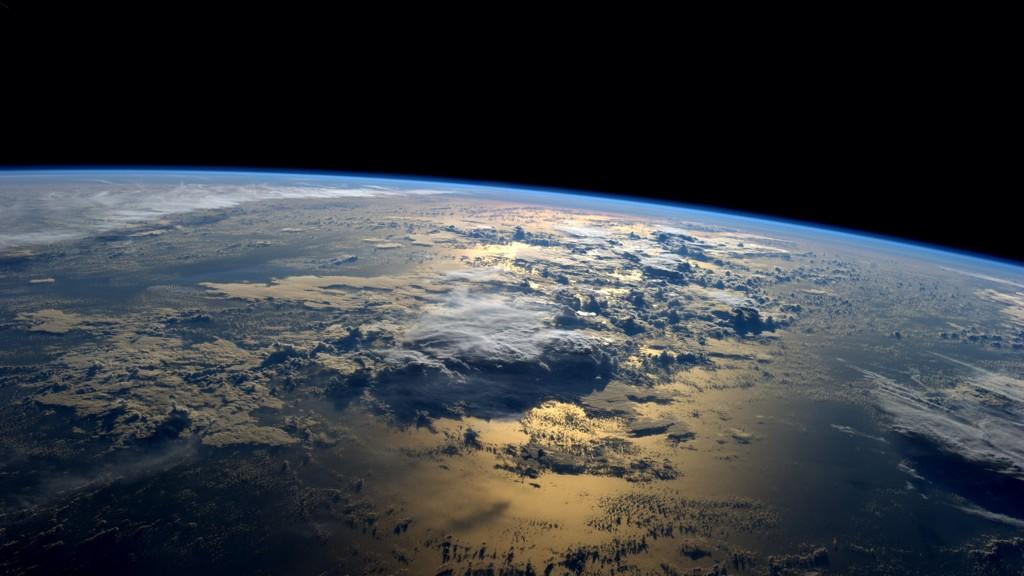
We can now observe the Earth in unprecedented detail. We monitor the atmosphere from space, model climate futures, track ecological disruption in near real time, and increasingly use artificial intelligence to synthesize vast amounts of information. Yet our institutions, incentives, and public sense-making remain too fractured to respond wisely at the scale of the Earth. The book proposes that what is now needed is planetary intelligence: a distributed civilizational capacity to sense, interpret, remember, deliberate, coordinate, and care at Earth scale.
The book brings together several strands that are rarely integrated in a single narrative: James Lovelock and Lynn Margulis’s Gaia hypothesis, Buckminster Fuller’s World Game and whole-Earth design vision, recent work in astrobiology and complex systems on “planetary intelligence,” and contemporary questions about AI, epistemic integrity, governance, and bioregionalism. Its central formulation is simple:
planetary intelligence = planetary intel + wise stewardship
That is, humanity must develop both the capacity to know how the planet is doing, and the ethical, institutional, and practical capacity to act on that knowledge in service to life.
This is a serious but accessible crossover work for readers interested in the future of civilization, ecology, AI, systems change, and governance. It is intended not only as a trade book, but also as the founding text of a broader public initiative, the Institute for Planetary Intelligence.
I am the Executive Director of the Center for Regenerative Community Solutions, a nonprofit platform for work in regenerative finance, community resilience, and systems change. My work has long focused on the intersection of ecological reality, institutional design, and civilizational transformation. I am also the author of the in-progress book Possible Planet: Pathways to a Habitable Future, and have developed related public-facing work on bioregional and planetary intelligence.
I believe this book would appeal to readers of Ferris Jabr, James Bridle, and Mustafa Suleyman, while offering a distinctive synthesis that connects Earth systems, intelligence, AI, governance, and life-centered design under a single civilizational frame.
I would be glad to send the full proposal and sample materials. Thank you for your time and consideration.
Sincerely,
Jonathan Cloud
[Email]
[Phone]
[Website]