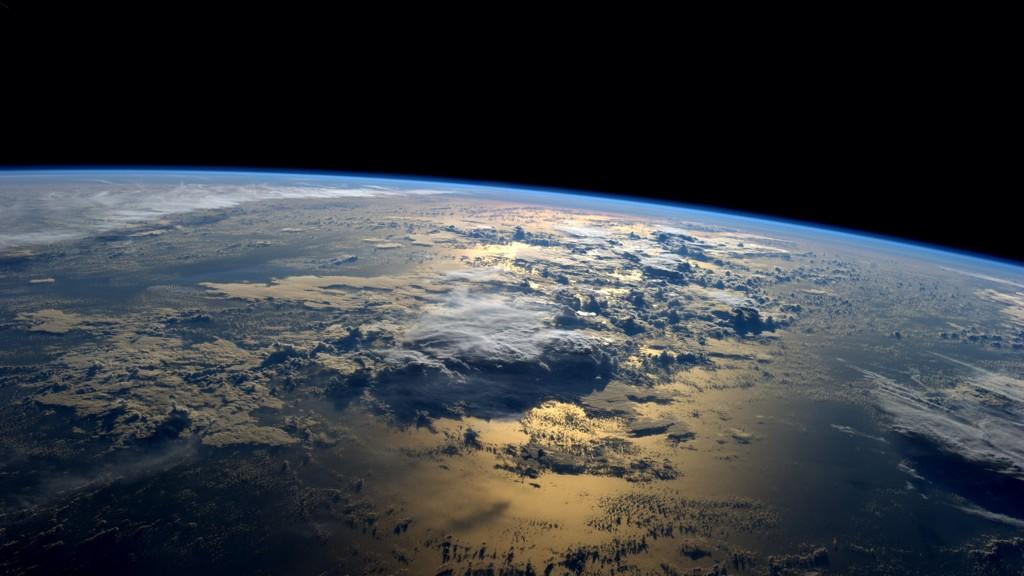
Full formal proposal
DEVELOPING PLANETARY INTELLIGENCE
AI, Earth Systems, and the Future of Civilization
Overview
Developing Planetary Intelligence is a nonfiction book that argues humanity has become a planetary force without becoming a planetary civilization. We now possess extraordinary powers to alter atmosphere, climate, biodiversity, hydrology, chemistry, landscapes, and increasingly the future trajectory of intelligence itself through digital and machine systems. Yet our institutions remain fragmented, our incentives remain extractive, and our sense-making remains unequal to the scale of our effects.
The book proposes a new framework for this predicament: planetary intelligence.
Planetary intelligence, as this book defines it, is not centralized control over the Earth, nor a mystical planetary consciousness. It is a distributed civilizational capacity to sense, interpret, remember, deliberate, coordinate, and care at the scale of a living planet. It joins two elements:
planetary intel — the capacity to know how the planet is doing
wise stewardship — the ethical, institutional, and practical capacity to act on that knowledge in service to life
The book draws together several streams of thought that are rarely integrated in a single, accessible work:
- James Lovelock and Lynn Margulis’s Gaia hypothesis and living-Earth thinking
- Buckminster Fuller’s World Game and whole-Earth design science
- recent scientific work on “planetary intelligence”
- Earth-system science and planetary boundaries
- artificial intelligence as both amplifier and threat
- epistemic integrity and trustworthy knowledge infrastructure
- bioregional intelligence and polycentric governance
- regenerative design, civic participation, and institution-building
The central claim is that the crises of our time—climate destabilization, ecological overshoot, information disorder, technological acceleration, and institutional breakdown—are not separate problems. They are symptoms of a deeper civilizational immaturity. Humanity has developed immense technical intelligence without developing adequate ecological, ethical, and collective intelligence.
This book offers both diagnosis and direction. It defines the field, introduces its intellectual ancestors, explains why it is urgently needed now, and proposes concrete pathways for developing planetary intelligence through bioregional platforms, public-interest AI, trustworthy knowledge systems, participatory governance, and new institutions aligned with the flourishing of life.
The book is also designed to serve as the founding publication of the Institute for Planetary Intelligence.
The central argument
The central problem of our time is not merely climate change, biodiversity loss, democratic erosion, or AI risk taken separately. It is that the human species has entered the feedback loops of the Earth system as a major force without developing a corresponding capacity for integrated, legitimate, life-serving intelligence.
Modern civilization is highly intelligent in narrow, instrumental ways. It can optimize supply chains, build predictive systems, increase computational speed, and generate wealth at extraordinary scale. But it remains systemically foolish. It undermines the ecological foundations of its own existence, degrades trust, rewards short-term extraction, and struggles to coordinate across scales and boundaries.
Planetary intelligence names the larger capacity we now need.
This book argues that such intelligence must be:
- distributed, not centralized
- ecological, not merely computational
- participatory, not technocratic
- trustworthy, not manipulative
- nested across scales, not abstractly global
- aligned with life, not merely with efficiency, dominance, or profit
The book’s core formula is:
planetary intelligence = planetary intel + wise stewardship
This formulation is meant to make the concept memorable and operational.
“Planetary intel” includes Earth observation, ecological indicators, public-interest data systems, historical memory, indigenous and local knowledge, scientific interpretation, and scenario modeling.
“Wise stewardship” includes ethics, legitimacy, institutions, governance, restraint, care, memory, justice, and the practical capacity to align action with the long-term flourishing of life.
The book’s wager is that the next stage of civilizational maturity will depend not only on whether intelligence increases, but on whether intelligence learns to serve life.
Why this book now
Several major currents have converged.
First, the ecological and civilizational predicament has deepened. Climate disruption, habitat loss, pollution, political fragmentation, war, and economic extraction are straining the human-Earth system.
Second, AI has rapidly moved to the center of public and strategic concern. Questions of intelligence, alignment, governance, and control are now widely recognized as urgent.
Third, living-Earth and planetary-scale frameworks have become more visible and scientifically grounded. There is growing interest in seeing humanity, technology, and the biosphere as parts of coupled systems rather than separate domains.
Fourth, there is an increasingly clear hunger for integrative thinking. Many readers, leaders, and practitioners sense that the current discourse is too fragmented. Climate, AI, governance, restoration, public trust, and civic renewal are still too often discussed separately. This book offers a framework that can hold them together.
The result is a strong opening for a field-defining book.
What makes this book distinctive
This book is distinctive in five ways.
1. It defines a field rather than addressing only one issue
It does not treat climate, AI, governance, or ecological restoration in isolation. It proposes a larger civilizational frame.
2. It integrates scientific, philosophical, and institutional threads
It connects Gaia, Earth systems, astrobiology, design science, AI, and governance without collapsing into abstraction.
3. It is both conceptual and practical
It does not stop at diagnosis. It lays out architectures, domains of application, and institutional pathways.
4. It grounds the planetary in the bioregional
It argues that planetary intelligence must be rooted in watersheds, ecosystems, local cultures, and civic knowledge—not only in global dashboards and elite institutions.
5. It can launch an institution and a public agenda
The book is designed to function as the founding text of the Institute for Planetary Intelligence, giving it unusual potential beyond standard trade nonfiction.
Intended readership
The book is intended for:
- educated general readers of big-idea nonfiction
- readers concerned with ecology, civilization, and the future
- systems thinkers and regenerative practitioners
- AI researchers, designers, and governance specialists
- policy, civic, and philanthropic leaders
- scholars and students in Earth-system science, futures studies, governance, and environmental humanities
This is a crossover book with intellectual ambition and broad relevance.
Comparable and complementary titles
Becoming Earth by Ferris Jabr
Shares the living-Earth sensibility and the recognition that life remakes the planet. Developing Planetary Intelligencemoves beyond this into AI, governance, and institutional design.
Ways of Being by James Bridle
Shares an expanded conception of intelligence beyond narrow human exceptionalism. This book is more explicitly civilizational, practical, and focused on public systems.
The Coming Wave by Mustafa Suleyman
Shares concern about transformative technologies outrunning institutions. This book places those concerns within a biospheric and life-centered frame.
Novacene by James Lovelock
A major precursor, especially in its treatment of electronic life and posthuman possibilities. This book is broader, more grounded, and more institutionally oriented.
Buckminster Fuller / World Game materials
A key design-science precedent. This book updates Fuller’s whole-Earth perspective for the age of AI, ecological overshoot, and participatory governance.
Author
Jonathan Cloud is a systems thinker, regenerative strategist, and nonprofit leader working at the intersection of ecological reality, civic transformation, and institutional design. He is Executive Director of the Center for Regenerative Community Solutions, a nonprofit platform for regenerative finance, resilience, and systems change.
His work spans sustainability, community development, ecological finance, governance, bioregional thinking, and AI in service to life. He has developed significant public-facing work around Possible Planet, bioregional intelligence, and planetary intelligence, and is particularly interested in building frameworks and institutions adequate to the scale of contemporary ecological and technological change.
This book grows out of long experience engaging practical systems as well as big civilizational questions.
Platform
The author’s platform includes:
- leadership of mission-driven nonprofit initiatives
- a growing body of writing and conceptual development around planetary and bioregional intelligence
- relationships across ecological, regenerative, and systems-change communities
- strong alignment with future programming under the Institute for Planetary Intelligence
- adaptability to talks, salons, podcasts, essays, workshops, and field-building events
The book’s value is amplified by the possibility of connecting it to an actual institutional launch, public dialogues, fellows programs, educational offerings, and pilot projects.
Proposed table of contents
Introduction
The Need for Planetary Intelligence
Humanity has achieved planetary power without planetary wisdom. This introduction defines the core problem and frames the book’s central concept.
Part I. The Planetary Predicament
Chapter 1. A Planet in Human Hands
A panoramic account of the coupled human-Earth crisis: climate, biodiversity, pollution, extraction, conflict, and technological acceleration.
Chapter 2. Why Intelligence Matters Now
Why “intelligence” is the right frame if understood broadly: sensing, learning, adaptation, coordination, and care.
Chapter 3. Fragmented Minds, Fragmented Systems
Why modern civilization knows so much yet acts so destructively: silos, incentives, disinformation, short-termism, and institutional lag.
Part II. What Planetary Intelligence Is
Chapter 4. Gaia and the Living Earth
Lovelock and Margulis as foundational thinkers of a living, self-modulating planet.
Chapter 5. From Gaia to Planetary Intelligence
A bridge from living-Earth theory to the emerging planetary-intelligence framework.
Chapter 6. Whole-Earth Knowing: Fuller and the World Game
Buckminster Fuller’s design-science vision as a precursor to planetary coordination.
Chapter 7. Planetary Intel and Wise Stewardship
The conceptual heart of the book and the clearest statement of its core framework.
Part III. How It Can Be Developed
Chapter 8. The Architecture of Planetary Intelligence
A systems framework: sensing, interpretation, memory, modeling, deliberation, coordination, action, feedback, and learning.
Chapter 9. The Role of AI: Promise, Peril, and Alignment
AI as amplifier of planetary sensing and coordination, and as a source of new risks.
Chapter 10. Epistemic Integrity and the Infrastructure of Trust
Why shared reality, provenance, transparency, and trustworthy knowledge systems are prerequisites for planetary intelligence.
Chapter 11. Scales of Intelligence: Personal, Local, Bioregional, Planetary
A framework for nested intelligence across scales.
Part IV. Institutions, Practices, and Pathways
Chapter 12. Bioregional Intelligence as the Ground of Planetary Intelligence
Why the planetary must be grounded in place, ecosystem, and civic stewardship.
Chapter 13. Designing Institutions for a Living Planet
Polycentric governance, commons-based systems, public-interest platforms, and the role of the Institute.
Chapter 14. Possible Futures: Symbiosis, Technosphere, Novacene, Collapse
Alternative trajectories for intelligence, technology, and civilization.
Chapter 15. A Practical Agenda for Developing Planetary Intelligence
Concrete next steps: pilots, platforms, standards, reviews, education, convenings, and collaboration.
Conclusion
Toward a Civilization Worthy of a Living Planet
A closing reflection on intelligence, humility, stewardship, and the future of life.
Chapter summaries
Introduction. The Need for Planetary Intelligence
The opening frames the paradox of a species capable of observing the whole Earth yet unable to govern itself wisely at that scale. It defines planetary intelligence as a distributed, life-serving civilizational capacity rather than a centralized authority or mystical abstraction.
Chapter 1. A Planet in Human Hands
This chapter surveys the contemporary predicament. It shows that climate instability, biodiversity loss, pollution, social stress, war, and technological disruption are not separate crises but interacting symptoms of a stressed planetary condition.
Chapter 2. Why Intelligence Matters Now
This chapter argues for a broader conception of intelligence. Intelligence is not just calculation or technical mastery; it includes awareness, adaptation, learning, coordination, memory, and care. Modern civilization is rich in instrumental intelligence but poor in systemic wisdom.
Chapter 3. Fragmented Minds, Fragmented Systems
This chapter explores fragmentation as the hidden architecture of failure. It addresses epistemic breakdown, siloed disciplines, market externalities, fractured media, and institutions unable to match the scale or pace of planetary disruption.
Chapter 4. Gaia and the Living Earth
A foundational chapter on Lovelock and Margulis. It explains the Gaia hypothesis in a form that is scientifically serious and philosophically fruitful: Earth as a system in which life helps shape the conditions for life.
Chapter 5. From Gaia to Planetary Intelligence
This chapter links living-Earth thought to recent planetary-intelligence thinking. It asks what it would mean for collective knowledge and coordinated action to become integrated into the long-term functioning of a civilization at planetary scale.
Chapter 6. Whole-Earth Knowing: Fuller and the World Game
This chapter presents Fuller as a major precursor. It explores the World Game, whole-systems accounting, design science, and the idea that a civilization can become more intelligent by seeing the whole more clearly.
Chapter 7. Planetary Intel and Wise Stewardship
This chapter introduces the book’s central formula and clarifies each term. It serves as the conceptual keystone of the manuscript.
Chapter 8. The Architecture of Planetary Intelligence
This chapter lays out a practical framework for how planetary intelligence works. It identifies the functional elements any such system must possess.
Chapter 9. The Role of AI: Promise, Peril, and Alignment
This chapter treats AI as a pivotal civilizational technology. It examines how AI may strengthen or weaken humanity’s ability to sense, model, and care for the Earth.
Chapter 10. Epistemic Integrity and the Infrastructure of Trust
Planetary intelligence requires trustworthy knowledge. This chapter addresses provenance, transparency, uncertainty, auditability, and public trust in a world increasingly mediated by synthetic systems.
Chapter 11. Scales of Intelligence: Personal, Local, Bioregional, Planetary
This chapter shows that planetary intelligence must be nested. It is not achieved only through global institutions, but through connected intelligence across persons, places, regions, and networks.
Chapter 12. Bioregional Intelligence as the Ground of Planetary Intelligence
One of the book’s most distinctive chapters. It argues that planetary intelligence becomes real when rooted in place: watersheds, foodsheds, habitats, cultures, and local forms of stewardship.
Chapter 13. Designing Institutions for a Living Planet
This chapter turns to institutional design. It explores the role of polycentric governance, commons-based systems, and new institutions oriented toward planetary stewardship.
Chapter 14. Possible Futures: Symbiosis, Technosphere, Novacene, Collapse
A future-facing chapter that explores different trajectories for intelligence and civilization, including Lovelock’s posthuman speculation.
Chapter 15. A Practical Agenda for Developing Planetary Intelligence
The action chapter. It proposes concrete steps that could be taken now to seed the field and its institutions.
Conclusion. Toward a Civilization Worthy of a Living Planet
The book closes by arguing that the decisive question is not whether intelligence will increase, but whether it can mature into wisdom in service to life.
Marketing and publicity potential
This book has strong positioning for:
- climate and ecology audiences seeking a larger frame
- AI audiences open to broader ethical and planetary questions
- readers of serious systems-change nonfiction
- regenerative and bioregional networks
- podcast and long-form interview formats
- institute and salon-based discussion series
- thought leadership at the intersection of technology, ecology, and governance
Possible essay or publicity angles include:
- What is planetary intelligence?
- Why AI needs a biospheric frame
- Gaia in the age of artificial intelligence
- Buckminster Fuller’s relevance now
- Why the future of the planet depends on better collective intelligence
- Why planetary intelligence must begin in the bioregion
- From information abundance to wise stewardship
Manuscript status and needs
At this stage, the concept, framing, and table of contents are well developed. The next steps would be:
- preparing a polished sample chapter
- refining author bio and platform details for outreach
- tailoring proposal versions for agents, publishers, and funders
- possibly preparing a short Institute-facing memorandum that links the book to the launch strategy
Recommended sample chapter choices:
- Chapter 7: Planetary Intel and Wise Stewardship
- Introduction: The Need for Planetary Intelligence
- Chapter 12: Bioregional Intelligence as the Ground of Planetary Intelligence
My recommendation remains Chapter 7, because it is the conceptual center and most clearly distinguishes the book.
Closing statement
Developing Planetary Intelligence is intended as a field-defining work of synthesis and invitation. It offers a new way to understand the intertwined crises of ecology, technology, and governance, and a constructive framework for moving beyond fragmentation toward life-centered civilizational maturity.
It is both a trade book and a founding document.
The strongest next move is to draft the sample chapter and the 1-page query version in a sharply polished form.