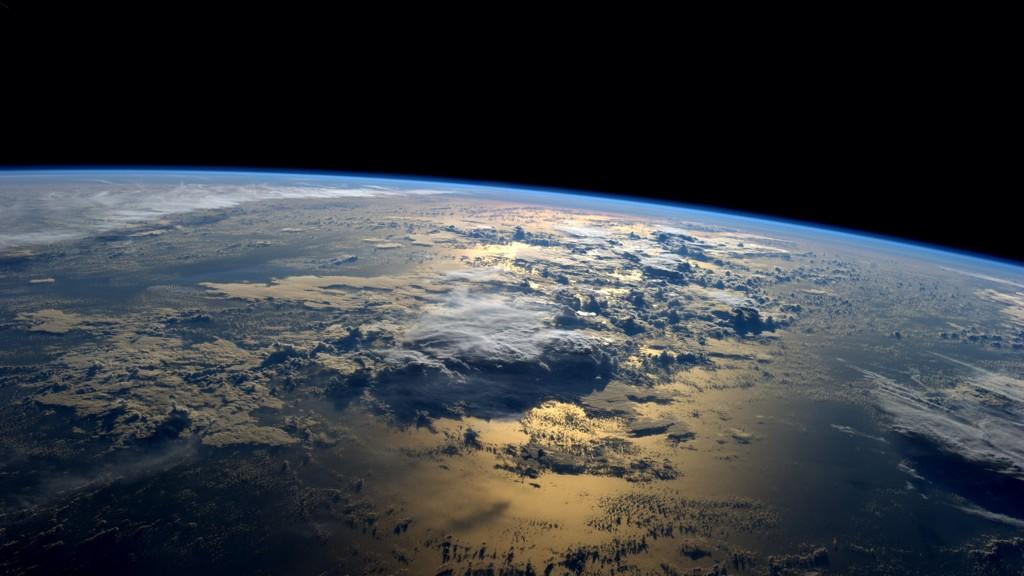
How peace and healing the planet are related
…And how war is part of the ecological crisis
How ending warfare and healing Gaia relate to each other in light of the dual inheritance of peaceful and violent traits –
Modern evolutionary psychologists view humans as a biological paradox, frequently describing our nature as a “dual-inheritance” model or an evolutionary hybrid of both the chimpanzee and the bonobo. Rather than being purely peaceful or purely warlike, human brains evolved highly flexible psychological mechanisms that switch depending on environmental cues.
Evolutionary psychologists explain our dual nature through several key theories:
## 1. The “Dr. Jekyll and Mr. Hyde” Brain
Our brains evolved different toolkits for dealing with the in-group (our family, tribe, or nation) and the out-group (outsiders or rivals).
* The Bonobo Side (In-Group): Within our own group, humans express high empathy, altruism, sharing, and intense cooperation. This is regulated by hormones like oxytocin, which promotes deep social bonding.
* The Chimpanzee Side (Out-Group): When a neighboring group is perceived as a threat, the exact same hormone (oxytocin) can trigger parochial altruism—a psychological state where defending our group and dehumanizing the outsider feels morally right.
## 2. Richard Wrangham’s “Execution Hypothesis”
In his influential research, evolutionary anthropologist Richard Wrangham explains how humans managed to become incredibly peaceful within their groups while maintaining the capacity for massive external warfare.
He argues that early humans underwent a process of self-domestication. Over hundreds of thousands of years, early human communities used language to conspire against and execute excessively reactive, aggressive bullies within the tribe.
* This systematically weeded out reactive aggression (hot-headed, impulsive fighting), making humans as gentle as bonobos in daily life.
* However, it left our capacity for proactive aggression (cold-blooded, calculated, planned group violence) completely intact. This is the exact type of premeditated violence used by chimpanzees on border patrols and by humans planning military campaigns.
## 3. Environmental Mismatch Theory
Psychologists emphasize that our “chimpanzee impulses” are often a product of evolutionary mismatch. In the ancestral environment, resources were scarce, and fearing strange tribes was a successful survival strategy.
Today, we live in a hyper-connected global society, but we carry the same Pleistocene-era brains. Modern media, political rhetoric, and internet algorithms can accidentally trigger our ancient “threat-detection” software, causing us to view harmless political or cultural subgroups as hostile enemy tribes.
## Summary: The Human Choice
Ultimately, evolutionary psychology suggests that biology is not destiny. Our genes give us the capacity for both savage tribalism and universal empathy. Whether we act more like chimpanzees or bonobos depends heavily on the culture, laws, and social structures we build to guide our behavior.
If you want to continue exploring this, we could look at:
* How modern internet culture and social media mimic ancient chimpanzee tribalism.
* The specific role oxytocin plays in making us love our friends but hate our enemies.
* Case studies of how human societies have successfully used “bonobo-style” diplomacy to prevent conflict.
Yes. I think there is a powerful connection here, but I would sharpen the evolutionary premise before building on it.
The chimpanzee/bonobo comparison is illuminating as a metaphor, but humans are not literally an evolutionary hybrid of the two. Nor is there a settled scientific consensus that human nature can be reduced to a simple peaceful/violent duality. What the evidence does support is something more interesting: Homo sapiens possesses unusually strong capacities both for large-scale cooperation and for organized, deliberate violence. Richard Wrangham’s distinction between reactive aggression and proactive aggression is particularly useful. His self-domestication hypothesis proposes that human evolution selected strongly against impulsive aggression while leaving intact our extraordinary capacity to cooperate in planned aggression.
That gives us a surprisingly strong bridge between ending warfare and healing Gaia.
The central paradox: the same capacity created both civilization and war
The distinctive human achievement may not be either peacefulness or aggression. It may be collective intentionality: our ability to imagine a goal, communicate it, organize around it, sacrifice for it, and act together with people we may barely know.
That capacity can produce a village irrigation system, a scientific institution, a mutual-aid network, a cathedral, an ecological-restoration project—or an army.
Wrangham’s argument is especially provocative because the evolutionary process that may have suppressed individual bullies depended upon coalition formation. Humans became better at cooperating, and that cooperation itself made planned violence more effective.
So I would formulate the human predicament this way:
Our evolutionary problem is not that humans are insufficiently cooperative. It is that human cooperation has historically been bounded.
We cooperate magnificently with us against them.
There is even experimental evidence consistent with this. Oxytocin should not simply be described as a “love hormone.” Research suggests that it can strengthen trust and cooperation within groups while also reinforcing defensive responses toward threatening outsiders—what researchers have called “parochial altruism” or “tend and defend.”
And here, I think, the relationship with Gaia becomes profound.
Gaia requires an enlargement of the in-group
For most of human evolutionary history, the relevant moral community was comparatively small: kin, band, village, tribe.
Civilization progressively invented larger imagined communities:
family → clan → tribe → city → religion → kingdom → nation
Each expansion allowed cooperation among larger numbers of strangers.
But the nation-state has not eliminated the underlying mechanism. It has enormously enlarged it. Hundreds of millions of people can now experience one another as “us” and another nation as “them.” Modern warfare is therefore not simply the survival of primitive aggression. It is ancient coalition psychology amplified by industrial technology, bureaucracy, nationalism and mass communication.
The ecological crisis presents humanity with the next—and perhaps decisive—expansion:
nation → humanity → community of life → Earth.
That is why ending warfare and healing Gaia are not really two separate projects.
They are two expressions of the same evolutionary transition: learning to expand the boundaries of belonging.
War against people and war against nature share a logic
There is another connection that goes beyond psychology.
War requires the abstraction of its object.
A person becomes the enemy. A forest becomes timber. A river becomes water resources. An animal becomes livestock. A mountain becomes ore. A landscape becomes territory.
Once the living particularity of something disappears behind an abstraction, actions that otherwise seem morally difficult become easier.
The cultural historian might therefore see industrial warfare and industrial extraction as manifestations of a related worldview: the world divided into subjects who command and objects that can be controlled.
This doesn’t mean environmental exploitation and warfare have a single cause. They plainly don’t. But they reinforce one another materially as well as psychologically. A major 2026 systematic review covering 263 studies found extensive impacts of military activity on greenhouse emissions, water, soils, ecosystems and food security; it estimated the global military carbon footprint at roughly 5.5% of greenhouse-gas emissions, while emphasizing substantial uncertainty and reporting gaps.
And causation runs in the opposite direction too. Ecological deterioration can intensify competition over land, water and resources. The UN reports that at least 40% of intrastate conflicts over the past six decades have had links to natural resources, and that such links increase the danger of conflict recurrence.
So there is a feedback loop:
ecological degradation → scarcity/insecurity → tribalization → conflict → ecological destruction → greater scarcity/insecurity.
But that means there can also be a regenerative feedback loop:
ecological restoration → shared abundance/security → cooperation → trust → stronger institutions → further restoration.
That second loop deserves much more attention.
From parochial altruism to planetary altruism
This is where your concept of planetary intelligence becomes particularly useful.
If our evolved psychology continually asks, consciously or unconsciously,
“Who is us?”
then the central cultural task of planetary civilization becomes changing the answer.
Not eliminating human tribal instincts. That is probably unrealistic.
Not expecting everyone suddenly to become universally altruistic.
Instead, we build institutions, stories and experiences that progressively redefine the tribe.
This is one reason bioregionalism could be important. It offers an intermediate scale between individual and planet. “Humanity” and “Gaia” can feel abstract. A watershed does not. People who disagree politically still drink the same water, experience the same drought, depend upon the same soils and encounter the same changing seasons.
A watershed therefore creates the possibility of a different identity:
We are the people who inhabit and care for this place.
And eventually:
We are members of the living community that inhabits this place.
That is a considerably more radical proposition.
Peacebuilding becomes Earthbuilding
This suggests that the peace movement and regenerative movement have historically been too separated.
Peace activists concentrate on disarmament, diplomacy, international law and conflict prevention.
Ecological movements concentrate on climate, biodiversity, agriculture, water, energy and restoration.
But viewed through evolutionary psychology, they converge on a deeper question:
Can humanity construct institutions that reward cooperation across increasingly large boundaries of identity?
That means ecological restoration itself can become peace infrastructure. Shared watersheds, forests, fisheries and landscapes give former antagonists something concrete that cannot be successfully managed by either side alone. UNEP explicitly treats environmental cooperation and equitable natural-resource governance as potential instruments of peacebuilding.
And peace becomes ecological infrastructure, because a civilization continuously devoting enormous intellectual, material, financial and energetic resources to preparing for organized destruction cannot devote those same resources to planetary repair.
The evolutionary transition we haven’t completed
There is an intriguing extension of Wrangham’s hypothesis here.
If early human societies really did undergo something resembling self-domestication, they created social mechanisms that constrained dangerous aggression within the community.
The great unfinished task may be to do at the planetary level what humans once accomplished at the village level.
We have made murder largely illegitimate within states while preserving organized killing between states.
We have established elaborate mechanisms for resolving disputes among citizens—courts, mediation, contracts, elections, police, constitutions—while continuing to accept warfare as an ultimate mechanism for resolving disputes among nations.
In that sense, humanity has domesticated interpersonal violence much more successfully than intergroup violence.
The next evolutionary-cultural achievement would therefore not require eliminating aggression from human nature. It would mean creating sufficiently powerful norms and institutions that proactive aggression between groups becomes as unacceptable as private vendetta has become in most modern societies.
And there is a fascinating inversion here.
The human capacity for coalition-building that once enabled warfare could become precisely the capacity that enables planetary regeneration.
The ability to organize millions of people.
To mobilize resources.
To sacrifice for future generations.
To coordinate science and technology.
To create shared narratives.
To defend something larger than ourselves.
Those are not exclusively military capacities. They are human cooperative capacities that militaries became extraordinarily good at harnessing.
The regenerative project can harness them too.
Gaia may be the larger “us”
This leads to what I think is the deepest formulation of your question.
Perhaps the alternative to tribalism isn’t the abolition of the tribe.
Perhaps it is making the tribe large enough.
The extraordinary psychological transition required by the Anthropocene may be:
I defend my family.
I defend my community.
I defend my nation.
I defend humanity.
I defend the living Earth that makes all of them possible.
But I would go one step further than “defend.”
The mature expression of that instinct is care.
Because Gaia is not another coalition competing against an enemy coalition. There is ultimately no external enemy. Humanity is embedded within the system it is destabilizing.
Which produces a formulation that I think could become an important proposition for Possible Planet and the Planetary Intelligence work:
Peace and planetary regeneration are one evolutionary project: expanding the human circle of belonging until there is no human out-group left to wage war against, and no living world outside the circle of our concern.
There is an important qualification. We should not imply that evolutionary psychology proves humanity is inevitably progressing toward planetary consciousness. It doesn’t. Our behavioral flexibility cuts both ways. Under fear, scarcity, humiliation and propaganda, the circle of identity can contract just as readily as it can expand. The ecological crisis itself could therefore generate either planetary cooperation or increasingly violent tribalism.
That makes the choice unusually stark: a damaged Gaia can activate the chimpanzee-like side of our inheritance through scarcity and conflict; healing Gaia can create conditions under which the cooperative side has room to flourish. And widening human cooperation makes healing Gaia possible in return.
That reciprocal relationship—peace regenerates Earth; regeneration builds peace—could be a very strong organizing idea for the next stage of Pathways to a Habitable Future — In Action.