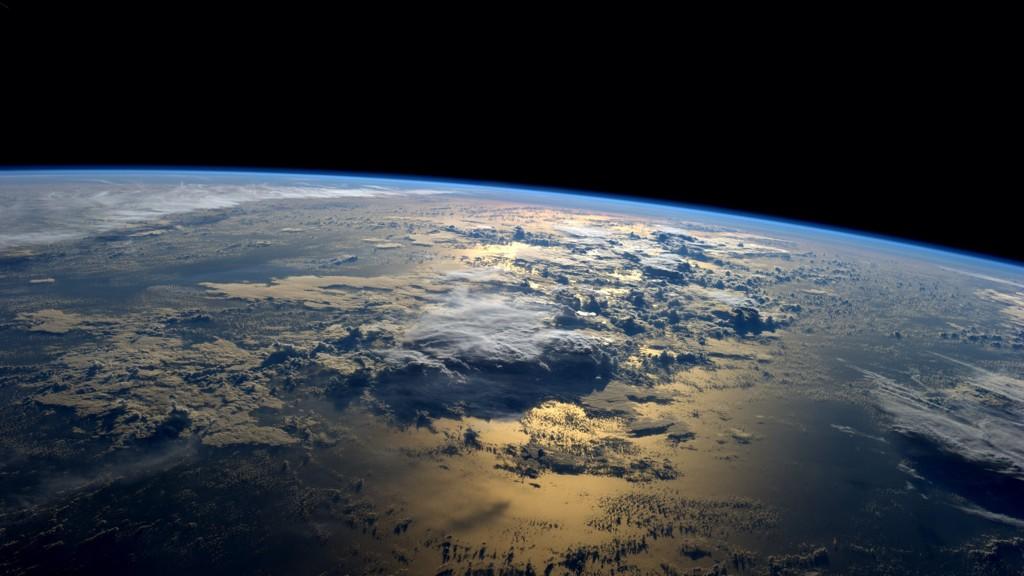
On the scientific side, what if we reversed our assumption, and saw planetary intelligence as already here, arising from (a) the increasing severity of the crisis, and (b) the discovery of AI, along with re-awakening us to the complex reality of life on earth and its ways of guiding us. Under that scenario, what questions should we ask, and what hypothese should we propose?
GPT-6? (Max thinking)
Yes. I think reversing the assumption makes the scientific project substantially more interesting.
Instead of asking, “How might planetary intelligence eventually emerge?”, we ask:
What if a rudimentary planetary intelligence is already emerging, and our task is to detect, characterize, test, and perhaps help it mature?
That turns planetary intelligence from a distant aspiration into an empirical hypothesis.
But I would make one important scientific adjustment. We should not begin by assuming that Earth has suddenly become conscious, or that ecological systems literally “send messages” in an intentional sense. We can begin with a more defensible proposition: a coupled biosphere–human–technological system may be acquiring new capacities for planetary-scale sensing, integration, learning, self-modeling, and adaptive response.
That is already a radical claim, and it is testable.
The inversion
The earlier model was roughly:
crisis → recognition → better tools → planetary intelligence
The alternative is:
planetary crisis + global sensing + AI + ecological rediscovery → evidence that planetary intelligence is already forming
Under this interpretation, climate disruption, biodiversity decline, pandemics, war, resource stress, satellite observation, global communications, Indigenous resurgence, systems science and AI are not separate phenomena. They are components of a civilization becoming increasingly capable of perceiving its own effects on the living Earth.
The crisis itself becomes part of the feedback system.
That suggests a provocative formulation:
Humanity became a planetary force before it became capable of perceiving itself as one. The present period may mark the beginning of that perception.
I would call this reflexive planetary intelligence.
The word reflexive matters. Intelligence becomes qualitatively different when a system can model not only its environment but its own behavior within that environment, observe the consequences, and alter itself accordingly.
We already see fragments of this:
Earth observation detects deforestation.
Climate models anticipate consequences.
Ecologists document ecosystem responses.
Economists model incentives.
Communities report local changes.
AI can increasingly synthesize those bodies of information.
Institutions sometimes act.
The scientific question is whether those fragments are becoming parts of a larger learning system.
The first question: what exactly would count as planetary intelligence?
Before anything else, we need an operational definition.
I would propose something like:
Planetary intelligence is an emergent property of interconnected biological, human, and technological systems that enables planetary conditions to be sensed, interpreted, learned from, and acted upon across scales.
A stronger version adds:
…with the capacity to modify collective behavior in response to feedback affecting the long-term habitability and flourishing of the Earth system.
But there is a complication here that I think the book should confront directly.
Intelligence is not the same thing as wisdom.
Human civilization is extraordinarily intelligent in some senses. It can sequence genomes, split atoms, model galaxies and build artificial intelligence—and simultaneously degrade the ecological systems upon which it depends.
So perhaps we eventually need two concepts:
Planetary intelligence — capacity to sense, understand, learn and coordinate.
Planetary wisdom — capacity to use that intelligence in ways compatible with long-term flourishing.
That distinction could become extremely important scientifically.
The central research questions
If we assume planetary intelligence may already be emerging, I would organize the inquiry around eight questions.
1. Where is the intelligence located?
Perhaps nowhere in particular.
Is the relevant cognitive system:
- humanity collectively?
- civilization plus its technological networks?
- the biosphere?
- the technosphere?
- the coupled biosphere–human–technology system?
My expectation is that the last formulation will prove most fruitful.
That shifts us away from searching for a giant metaphorical brain.
Planetary intelligence might resemble an ecology of cognition rather than an organism with a central nervous system.
2. What are its sensory organs?
This becomes surprisingly concrete.
Satellites.
Weather stations.
Ocean buoys.
Ecological surveys.
Microphones recording forests.
Genomic sequencing.
Citizen science.
Indigenous observation.
Farmers.
Fishermen.
Public-health systems.
Social networks.
Local communities.
The planetary system has developed an unprecedented ability to perceive itself.
But sensing is not yet intelligence.
The next question is whether those signals are being integrated meaningfully.
3. Is AI creating a new integration layer?
This may be the most important contemporary hypothesis.
Before AI, civilization accumulated vast quantities of knowledge but organized much of it into separate disciplines, institutions and languages.
AI potentially changes the bottleneck.
It may allow us to move from:
information abundance + cognitive fragmentation
toward:
information abundance + integrative interpretation.
That is not guaranteed. AI can also generate misinformation, homogenize thought and amplify bad assumptions.
So this becomes experimentally testable.
Can human–AI research systems actually solve interdisciplinary problems better than conventional human teams?
4. Is the planetary crisis itself accelerating intelligence?
This is your inversion at its strongest.
The polycrisis could function as a powerful feedback signal.
Climate extremes make atmospheric dynamics politically salient.
Species collapse makes ecological interdependence visible.
Pandemics reveal biological interconnectedness.
Supply-chain disruptions reveal economic interconnectedness.
War reveals planetary material dependencies.
The crisis says, in effect:
Your systems are connected whether or not your institutions recognize the connections.
But we must entertain the opposite possibility as well.
Extreme crisis can diminish collective intelligence through fear, tribalism, authoritarianism and misinformation.
So the relationship may be nonlinear.
Moderate crisis may provoke learning.
Severe crisis may destroy the conditions for learning.
That becomes an important research question.
A first set of hypotheses
I would begin the scientific program with hypotheses that can eventually be sharpened into measurable propositions.
H1 — The planetary reflexivity hypothesis
Human civilization is developing an increasing capacity to observe and model its own impacts on Earth systems.
Prediction: the latency between ecological change, detection, scientific interpretation and public awareness should decline over time.
We can actually measure aspects of this historically.
H2 — The crisis-induced cognition hypothesis
Planetary-scale disturbances increase cross-disciplinary and cross-border information exchange and stimulate new forms of collective problem-solving.
But I would add a competing hypothesis:
H2b — The crisis-fragmentation hypothesis
Beyond some level of threat, crisis reduces collective intelligence by increasing polarization, misinformation, nationalism and institutional breakdown.
The real relationship may resemble an inverted U.
That would be a fascinating line of research.
H3 — The AI integration hypothesis
AI increases planetary intelligence primarily by reducing the cost of integrating knowledge across previously separated domains.
That is a stronger and more interesting claim than simply saying AI is intelligent.
The test is straightforward in principle:
Give complex Earth-system problems to:
- disciplinary experts;
- interdisciplinary human teams;
- AI systems;
- human–AI teams.
Then compare accuracy, novelty, explanatory integration, uncertainty calibration and practical usefulness.
My expectation is that human–AI teams will outperform either alone, but that itself should remain a hypothesis.
H4 — The ecological signal amplification hypothesis
AI combined with environmental observations will allow ecological regime shifts and systemic risks to be detected earlier than conventional scientific processes alone.
For example:
forest stress + precipitation + groundwater + insect populations + soil moisture + satellite imagery.
Individually these may appear unrelated.
Integrated analysis might reveal a transition before any individual indicator becomes alarming.
Here the metaphor that Earth is “speaking” becomes scientifically tractable.
The signals are real.
Whether we are capable of hearing them is measurable.
H5 — The distributed intelligence hypothesis
Planetary intelligence will perform better as a federated network than as a centralized decision-making system.
This connects directly to bioregionalism.
Local systems possess information that global systems cannot fully capture.
Planetary systems possess patterns that local observers cannot see.
Therefore:
local sensing → planetary synthesis → local interpretation → action → planetary learning
may outperform either top-down or purely local governance.
Bioregions could become something like nodes—or, cautiously, “organs”—within an emerging planetary intelligence network.
H6 — The epistemic-diversity hypothesis
Systems combining multiple ways of knowing will outperform epistemically homogeneous systems.
That could include:
scientific disciplines;
Indigenous and traditional ecological knowledge;
community observation;
historical knowledge;
AI-based pattern recognition.
This one must be investigated carefully rather than romanticized.
Not every traditional belief is correct.
Not every scientific conclusion is complete.
The hypothesis is that epistemic diversity coupled with rigorous comparison and feedback improves collective learning.
H7 — The disagreement hypothesis
A planetary intelligence system that preserves competing interpretations and uncertainty will outperform one optimized for consensus.
This could become a defining principle of the Institute.
Multiple AIs should sometimes disagree.
Scientists should disagree.
Communities should disagree.
The system should ask:
What assumptions produce the disagreement?
What observations would distinguish the explanations?
That turns disagreement into a generator of knowledge.
H8 — The self-correction hypothesis
The strongest evidence for planetary intelligence would not be producing good answers.
It would be learning from bad ones.
A genuine intelligence system should maintain records of:
what it predicted;
why;
what happened;
where it was wrong;
what changed afterward.
That means the Planetary Intelligence Engine we have discussed should contain institutional memory from the beginning.
And then several more provocative hypotheses
These may belong slightly farther out on the research frontier.
H9 — The intelligence-transition hypothesis
Human civilization is passing from a period dominated by individual and institutional intelligence toward one characterized increasingly by networked collective intelligence.
AI is not the cause of that transition but a powerful catalyst.
H10 — The biospheric-constraint hypothesis
Ecological systems themselves provide information that constrains viable human futures.
In this sense, nature “guides” civilization without requiring intentional agency.
A watershed tells us what agricultural practices are sustainable through sediment, flooding, nutrient flow and biological response.
A climate system communicates through temperature, circulation, drought and extreme events.
The “instructions” are embedded in system behavior.
This gives us a rigorous bridge between ancient ideas of listening to the Earth and contemporary Earth-system science.
H11 — The wisdom-gap hypothesis
Planetary intelligence may increase while planetary health continues to deteriorate.
That would indicate that cognition is not the principal limiting factor.
Power, incentives, institutions, inequality, identity or political economy may prevent knowledge from becoming action.
This hypothesis protects us against technological solutionism.
H12 — The emergence hypothesis
At some threshold of connectivity, sensing, memory and coordination, the coupled human–technological network may acquire capabilities that cannot readily be attributed to any individual participant.
That is the true emergence question.
But I would resist jumping from this to consciousness.
Emergent cognition does not demonstrate emergent subjective experience.
That distinction will give the nonfiction project scientific credibility.
A particularly interesting question: why now?
Your reversed framing raises another profound question.
Why might planetary intelligence be appearing at precisely this historical moment?
Perhaps because several necessary conditions have converged:
Planetary agency — humanity can transform Earth systems.
Planetary crisis — consequences of that agency have become impossible to ignore.
Planetary sensing — we can observe Earth at extraordinary spatial and temporal scales.
Planetary communication — billions of humans can exchange information nearly instantly.
Planetary computation — we can model complex systems.
Artificial intelligence — increasingly, we can synthesize bodies of knowledge beyond the capacity of individual humans.
Ecological reawakening — Western assumptions of separation from nature are being challenged by ecology, systems science and renewed attention to Indigenous knowledge.
None alone constitutes planetary intelligence.
Together they may create the conditions for it.
The stronger scientific proposition
That leads me toward a thesis for the book that I think is stronger than our previous formulation:
Planetary intelligence may not be something humanity needs to invent. It may already be emerging from the increasingly dense interaction among Earth’s living systems, human civilization, and our technological means of sensing and understanding the planet. AI may represent not the birth of planetary intelligence, but a new integrative layer within it.
That is both ambitious and scientifically investigable.
And there is a second, darker half:
Emergence does not imply success.
An intelligence can fail.
A civilization can recognize the consequences of its behavior and nevertheless prove unable to change them.
That may be the great experiment of the twenty-first century.
What I would have the Institute investigate first
Rather than beginning with a sweeping declaration that planetary intelligence has arrived, I would frame the Institute’s first research program around one question:
What empirical evidence would allow us to distinguish an emerging planetary intelligence from an increasingly interconnected but fundamentally uncoordinated technological civilization?
That question forces rigor.
We could then identify candidate indicators:
sensing capacity
integration across knowledge domains
speed of feedback
accuracy of collective models
ability to retain institutional memory
response to error
coordination across scales
incorporation of diverse knowledge
anticipation rather than reaction
measurable improvement in ecological outcomes
Those could eventually become the basis for a Planetary Intelligence Index—not immediately as a numerical score, but first as a research framework.
And that gives Emergence of Planetary Intelligence a much more compelling arc.
The story is no longer:
Perhaps someday Earth will become intelligent.
It becomes:
Something extraordinary may already be happening. How would we know? What exactly is emerging? And can it become wise enough, quickly enough, to matter?
That last question, I think, may be the scientific book’s real heartbeat.
Emergence_of_Planetary_Intelligence_Framing_and_Roadmap_v0.2a